Case Study | Confidustria Ascoli Peceno modernizes association elections
The Lumi Platform is designed for AGMs, Investor Relations meetings and all other types of shareholder meetings, virtual, in-room or hybrid.
Our Election tools include Electa and Eligo, designed for both scheduled and live voting to make your elections secure, fair, and with full end-to-end verifiability.
A series of professional event venues located in Canada, supporting live broadcast rooms, AV equipment rental and integrated catering options.
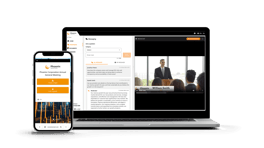
Running elections has never been easier with the latest voting tools from Lumi Global
We work with a variety of businesses
See what makes the Lumi Platform the most feature-rich meeting platform
Lumi Global has acquired EligoVoting, Italy’s leading electronic and online voting platform.
Elder Councils (Aeldrerad or Seniorrad in Danish) are a cornerstone of local democracy in Denmark. Required by law in all 98 municipalities, these elected advisory bodies give residents aged 60 and over a formal voice in decisions that affect them. Council members are elected every four years by eligible older residents, and local policymakers are legally required to consult them on proposals affecting elderly citizens.
Running Elder Council elections is the responsibility of each individual municipality. Danish law does not prescribe how or when they must be held, only that they take place every four years. This flexibility has opened the door for municipalities to modernize how they deliver elections, and many have chosen to do so through digital voting.
By 2025, more than one third of Denmark's municipalities were using some form of digital voting for these elections. The 2025 cycle, the most complex to date, saw 16 municipalities hold their elections to coincide with national local and regional elections in November, using Lumi Global’s election platform, Electa.
Running Elder Council elections presents a distinct set of challenges. The audience, voters aged 60 and over, requires solutions that are genuinely accessible rather than just technically available. At the same time, local authorities are under real resource pressure, and dedicating staff and budget to running elections that are not always high-profile is difficult.
In 2025, 32 municipalities chose to hold their Elder Council elections alongside national local and regional elections on November 18th, a decision that maximized voter touchpoints but required careful coordination across multiple simultaneous voting processes. That meant:
Beyond the operational complexity, there was also a broader accessibility challenge. While Denmark is one of the world's most digitalized countries, introducing new voting technology to older citizens required a careful approach, one that built confidence rather than creating barriers.
More than 20 different election configurations were in use across Denmark, reflecting the varying needs of individual municipalities.
Lumi Global worked closely with each municipality from the point of contract signature, with project managers maintaining regular contact to agree rules, timelines, and voter registration processes well ahead of election day.
The core of the solution was Electa, Lumi Global’s all-in-one election platform, configured to support multiple voting channels:
This multi-channel approach was central to the accessibility strategy. Rather than requiring voters to adopt a new method, it gave them genuine choice. Municipalities could configure their own combination of channels based on local needs, resulting in flexible deployment at scale.
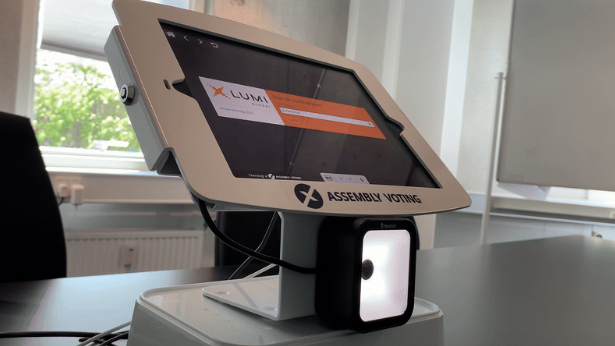
In the months leading up to the elections, candidates registered through Lumi Global’s candidacy management platform. Once approved, their profiles were used to generate ballots for each municipality. Lumi Global then configured and tested 292 scanner-equipped iPads, sorted them by municipality, and personally delivered them to polling locations across the country.
On election day, Lumi Global staff were present at high-traffic polling stations in Aarhus and Skanderborg to oversee operations, support polling station volunteers, and gather direct feedback from voters.
The 2025 Elder Council elections were successfully delivered across all 32 municipalities supported by Lumi Global, 28 of which went to a vote, with four returning candidates by acclamation.
The voting infrastructure performed reliably throughout an extended electoral period spanning October and November.
Turnout varied across municipalities of different sizes, consistent with patterns seen in decentralized municipal elections. Larger municipalities recorded participation rates of around 20-25%, while smaller ones achieved significantly higher turnout. Where turnout fell short of expectations, analysis pointed to factors around public awareness and candidate visibility.
Voters at polling stations described the experience as "fast, easy, and nice" - and many expressed support for a similar system being used in future local and regional elections.
The project also generated valuable operational insights that will inform future elections, including the importance of kiosk placement, voter communication ahead of election day, and the continued value of in-person polling locations as community spaces for civic participation.
Speak to our experts to find out how you can deliver your next election.
 About
About
Local, elected advisory councils representing citizens aged 60+ across municipalities in Denmark. They provide input on policies related to elderly care, healthcare, housing, and social services, ensuring the needs and perspectives of older residents are reflected in local government decisions.
IndustryGovernment / Public sector
Organization typeMunicipal advisory body
ProjectElder council elections
Join the world’s leading organizations that trust Lumi Global with their critical meetings.