

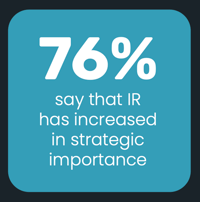
The role of investor relations is crucial for drawing in investors and creating lasting relationships with them. According to research by The London Stock Exchange, 76% say that IR has increased in strategic importance over the last two years. And, particularly during periods of economic uncertainty, IROs need a strategic plan to execute their responsibilities efficiently. Creating an IR strategy involves meticulous planning, effective communication, and precise execution.
In this article, we cover the essential components of crafting an investor relations strategy that empowers IROs to harness investor potential, forge robust connections, and maximize stakeholder engagement.
4 steps for building an effective IR strategy
1. Define precise objectives, track progress, and assess results
Achieving success begins with clearly defining your objectives. Establishing specific, measurable goals is the guiding star for your investor relations efforts. These objectives should align with the outcomes you aim to achieve within a set timeframe—six months or a full year.
Here are some useful Investor Relations objectives and KPIs that IROs could use to track and measure success:
IR Objectives:
- Improve disclosure practices
- Build analyst following
- Broaden the investor base
- Enhance the ESG story
- Increase foreign ownership
IR KPIs:
- Share price performance
- Shareholder base growth
- Analyst coverage
- Number of investor calls and meetings
- Investor engagement and participation
Whether you're striving for substantial growth, enhancing your company's credibility among potential investors, or bolstering existing investor relationships, it's crucial to revisit and refine these goals regularly. Adjust them as needed and make sure you clearly understand what success entails from your C-Suite's perspective.
2. Craft a compelling and cohesive equity story
Your IR strategy must convey a clear and consistent message that embodies your company's vision, core values, and overarching business strategy. Position your equity story at the forefront of your messaging to distinguish your business from the competition. This narrative should be both memorable and transparent, effectively outlining your market position, past achievements, key milestones, and future objectives.
Once your messaging is crystal clear, it's time to identify the most impactful channels to reach your target audience. Begin with the end goal in mind by envisioning the headlines you'd like to see in analysts' reports about your business. Remember to select your communication channels accordingly, whether it's through social media, webcasts, or traditional media outlets.
For a great visual example of an equity story, see this example from engineering firm KONE, which gives a comprehensive and holistic overview of their operations and mission:
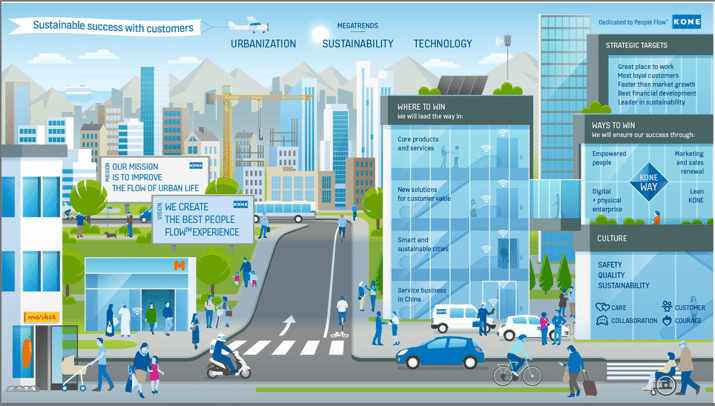
You can find KONE's full equity story here.
3. Build relationships and engage with stakeholders
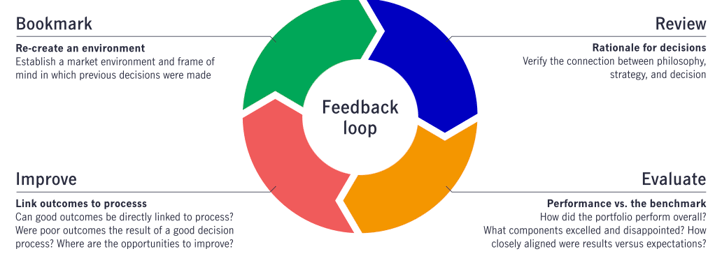
Fostering and nurturing relationships with your stakeholders is paramount to the success of your investor relations strategy. This process involves consistent communication, timely and precise information, and promptly addressing their inquiries and concerns. Creating a feedback loop is equally essential; don't hesitate to solicit feedback from your stakeholders to enhance mutual understanding.
Investor days and IR meetings present invaluable opportunities for businesses to engage with stakeholders and deepen investor relationships through a commitment to transparency and openness. It's vital to ensure these events are accessible and convenient for attendees, which means carefully considering the format and logistics.
The shift towards virtual and hybrid IR meetings, accelerated by the pandemic, has spurred significant technological advancements. Today, achieving a seamless experience for both in-room and virtual participants is possible through high-quality broadcasting and balanced Q&A sessions, facilitated by tools like virtual microphones.
4. Prioritise ESG initiatives
Environmental, social, and governance issues are increasingly at the forefront of investor discussions, with stakeholders frequently raising questions about executive compensation and environmental initiatives.
As expectations for businesses to meet their ESG responsibilities rise and scrutiny intensifies, it's crucial to articulate your organization’s ESG commitments clearly. This transparency helps set the bar for current and prospective investors, demonstrating your understanding of their priorities and concerns.
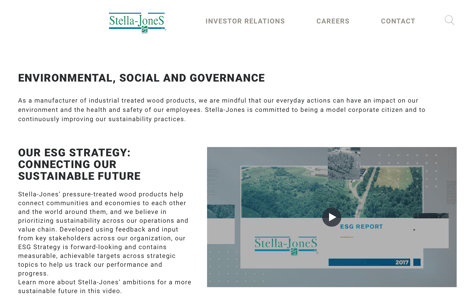
Leverage events such as Investor Days, retail Investor Days, and dedicated ESG Days to emphasize your core messages on these critical topics. Reinforce these values through various communication channels, including press releases, presentations, ESG reporting and annual reports. And, like IR award-winners Stella-Jones, make sure there is a dedicated ESG section on your organization's website, to ensure your stance is consistently and effectively communicated:
How to measure the success of your IR program
Share price performance matters, but it's only part of the picture. The most effective IR teams measure success across three areas:
- Market performance. Share price, valuation relative to peers, and growth in the shareholder base.
- Quality of engagement. Not just how many investor meetings you hold, but how deep they go. Two-way channels like live Q&A at investor days and earnings calls help you understand investor concerns before they surface at the AGM.
- Transparency. Investors expect clear, honest communication about performance, strategy and outlook. Consistent disclosure across every channel builds trust and credibility.
Review these measures at least annually, and adjust your objectives as investor priorities change, whether that's new communication channels, ESG expectations or a shift in your shareholder base.
What leading IROs say about building an IR strategy
In a Best Practice Report produced by IR Magazine in partnership with Lumi Global, leading investor relations officers shared how they plan, run and measure their strategies. A few themes came through clearly:
- Start with your story. Develop a clear stakeholder story, plan your messaging around it, and align internally before you go to market.
- Keep it simple. With investors following more companies than ever, a focused, easy-to-follow equity story stands out.
- Plan ahead, but stay nimble. Build your IR calendar in advance while leaving room to respond to changing investor sentiment.
- Use virtual tools well. Combine in-person and virtual engagement to reach more investors cost-effectively.
- Show your progress. Measure results against your objectives and report progress to your board and C-suite.
Wrapping up
Building and maximizing your investor relations strategy is a crucial step in creating a successful IR program. Your strategy can and should evolve over time, so review it regularly and adjust it to fit your business objectives. If you're weighing up technology to support your IR meetings, read why you should use an investor relations platform. For communications planning, see creating a cohesive investor communication plan.
Frequently asked questions
What is an IR strategy?
An investor relations strategy is a plan for how a company communicates with investors, analysts and other stakeholders. It sets out your objectives, your equity story, the channels and events you'll use, and how you'll measure success.
What should an IR strategy include?
Clear objectives and KPIs, a compelling equity story, a stakeholder engagement plan with an IR calendar, your ESG messaging, and a way to measure and report results.
What KPIs should investor relations teams track?
Common KPIs include share price performance, shareholder base growth, analyst coverage, the number of investor calls and meetings, and levels of investor engagement and participation.
How often should an IR strategy be reviewed?
At least once a year, and whenever market conditions, investor sentiment or company strategy change significantly.
Lumi Global’s IR guide

Excellent Investor Relations is all about demonstrating authenticity, transparency, and strong communication. This sets the foundation for meaningful investor relationships. Lumi Global’s guide to Investor Relations covers the expanding role of IR, as well as the part it plays in cultivating a vital lifeline between a company and its stakeholders.
Our comprehensive and practical guide is full of expert advice and covers all of the must-know topics that IROs need to read about, including:
- How to create a successful Investor Relations program
- How to build your IR strategy
- Tips for achieving excellence in ESG reporting
Download the IR guide PDF