
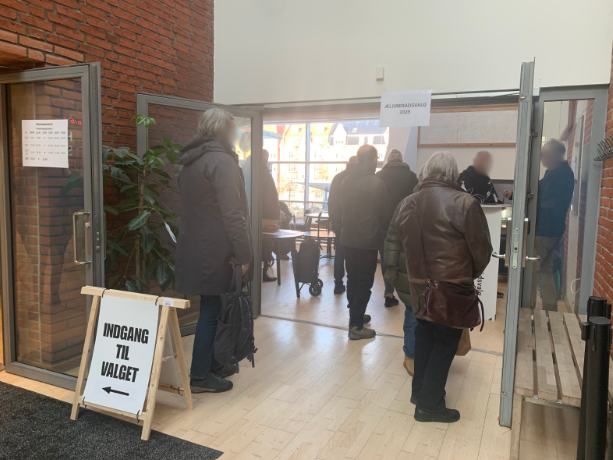
In Denmark, older citizens have a formal voice in local government. Every municipality is required by law to have an Elder Council, an elected advisory body representing residents aged 60 and over, and those councils can directly influence local policymaking on issues affecting older people. But holding elections for these councils is no small undertaking, and for years many municipalities struggled with the resource demands of running them well.
Over the past decade, Lumi Global has worked with municipalities across Denmark to change that. By introducing digital voting to Elder Council elections, we have helped local authorities reduce the administrative burden of running elections while making it easier for older voters to participate. Today, approximately one third of the 91 municipalities that held elections in 2025 use Lumi's election platform, Electa, to deliver their Elder Council elections digitally.
A complex election, delivered at scale
In the autumn of 2025, 32 Danish municipalities held their Elder Council elections to coincide with national local and regional elections on November 18th. That scheduling decision added a layer of operational complexity: voters at polling stations were simultaneously participating in multiple elections, and kiosks for Elder Council voting had to run seamlessly alongside traditional voting infrastructure.
The scale of the project was considerable. Across the 32 municipalities, over 652,450 voters were eligible to cast a ballot for their local Elder Council. To support in-person digital voting, Lumi Global configured, tested, and personally delivered 292 scanner-equipped iPads to polling locations across the country. Remote online voting was also available in most municipalities, allowing voters to participate from their own devices ahead of election day using Denmark's national digital identity system, MitID.
"Fast, easy, nice" - words used by voters at polling stations to describe their experience voting digitally.
Lumi Global staff were present at high-traffic polling locations on election day to oversee operations and gather feedback directly from voters and the volunteer teams supporting them. The response was consistently positive, with many voters expressing support for the idea of using a similar system in future local and regional elections.
Built for accessibility
Elder Council elections are, by definition, elections for and by older citizens. Making digital voting work for this audience was not an afterthought; it was central to the design of the solution.
Rather than replacing familiar voting methods, Lumi Global’s approach was to offer digital voting as an additional channel alongside existing options. Municipalities could configure their elections in different ways depending on local needs, resulting in over 20 different election setups across the country.
Options included:
- Remote online voting via a web browser using MitID
- In-person digital voting via iPad kiosks at polling stations, with authentication by scanning a national health card
- A hybrid model combining both remote and in-person digital voting
- Traditional paper ballots retained alongside digital options for voters who preferred them
This flexibility meant that voters could participate in the way that suited them best. And the results suggest the approach worked: more than 90% of all votes were cast through digital channels, with over 80% cast remotely through the online voting system.
The results
The 2025 Elder Council elections were successfully delivered across all 32 municipalities supported by Lumi Global, 28 of which went to a vote, with four returning candidates by acclamation.
- 652,450 eligible voters served across 32 municipalities
- 156,187 votes cast in total
- 90%+ of all votes cast through digital channels
- 80%+ cast remotely via the online voting system
- Turnout of 42-52% recorded in several smaller municipalities
- Positive sentiment from voters and polling station staff, with strong support for extending digital voting to future elections
Voter turnout varied across municipalities of different sizes, as is typical in decentralized electoral frameworks. Larger municipalities recorded participation rates of around 20-25%, while smaller ones reached significantly higher turnout. Where turnout fell short of expectations, the factors were largely related to public awareness and candidate visibility rather than the voting technology itself, a reminder that digital voting is one part of a broader civic engagement challenge.
What this means for the future
The 2025 Elder Council elections demonstrated that digital voting can support large-scale municipal elections while offering genuine flexibility to voters. The high level of digital adoption, particularly remote participation, reflects both the accessibility of the platform and the trust that voters in Denmark's highly digitalized society are increasingly placing in online services.
Importantly, the elections also showed that in-person voting at polling stations remains an important democratic ritual for many people, particularly older citizens. Physical polling locations are not just places to vote, they are community spaces. Lumi Global’s multi-channel approach is designed to support that, not replace it.
As municipalities look ahead to future elections, the lessons from 2025 provide a strong foundation. Lumi Global will continue to work with municipal partners across Denmark to refine the system and ensure that every eligible voter can participate in the way that works best for them.
Find out more
This project was recognized by the International Centre for Parliamentary Studies (ICPS), which published an article on the Elder Council elections on their website. Lumi Global is proud to be delivering secure, accessible voting technology that supports democratic participation at every level.
You can also read the full case study here.
If you are involved in running elections and want to understand how digital voting could work for your organization, we would be glad to hear from you.
Get in touch with the Lumi Global team to start the conversation.