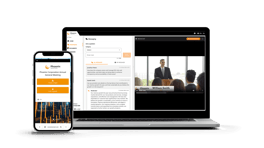


Hybrid shareholder meetings combine in-person and virtual attendance, enabling organizations to maximize participation while maintaining governance rigor. As organizations increasingly adopt the hybrid annual general meeting format, delivering a secure hybrid AGM experience has become a priority for governance and investor relations teams.
As 94% of OECD (Organisation for Economic Co-operation and Development) jurisdictions now permit hybrid formats, company secretaries and governance leaders face the challenge of delivering compliant, secure, and engaging experiences for all stakeholders.
This guide walks you through the essential steps, from verifying legal requirements and selecting the right platform, to implementing robust security and fostering interactive Q&A, so you can confidently host hybrid meetings that meet regulatory standards, protect shareholder data, and drive meaningful engagement across every participation channel.
Review governance and legal requirements
Before scheduling your first hybrid meeting, confirm that your organizational documents permit this format. Many jurisdictions have updated corporate law to recognize hybrid and virtual meetings, but your articles of association or bylaws may still require amendment. Start by reviewing your governing documents alongside local regulations to identify any gaps or restrictions.
If amendments are needed, prepare a resolution for board approval and, where applicable, seek shareholder consent. Document the approval process carefully to create a clear audit trail.
According to OECD research, 94% of member jurisdictions permit hybrid meetings, and 85% allow fully virtual alternatives. However, some countries impose specific requirements: Chile and Latvia, for example, mandate certified identity verification and vote secrecy for remote participants.
Transparency is a regulatory best practice. Ensure your procedures treat in-person and virtual questions equally, and publish clear rules for how questions will be moderated and addressed. By aligning your meeting format with legal and governance standards from the outset, you minimize compliance risk and build a solid foundation for smooth execution.
Choose the right hybrid meeting platform
Your technology platform is the backbone of a successful hybrid meeting. It must support secure voting, low-latency video streaming, robust Q&A modules, real-time polling, and multilingual capabilities—all while maintaining strict data security and auditability.
The right shareholder meeting platform should balance engagement, security, compliance, and operational simplicity. An effective AGM voting platform should support secure participation for both physical and remote attendees while maintaining complete auditability.
When evaluating vendors, prioritize platforms that offer centralized management dashboards and proven uptime guarantees.
Electronic voting for shareholder meetings refers to digitally enabled, real-time casting and recording of votes, complete with audit trails and data integrity safeguards. Look for solutions that support multiple voting methods, including bring-your-own-device (BYOD) and kiosk-based options, to accommodate diverse shareholder preferences.
Authentication is equally critical. Platforms should offer multi-factor authentication, biometric verification, or password-protected access to prevent unauthorized participation.
Consider building a comparison table to assess platforms across key dimensions such as authentication methods, voting transparency, data security certifications, scalability, technical support and, perhaps most importantly, whether the platform you choose will allow an equal experience for participants whether they are in-person or attending virtually. Choose a platform with strong reliability to reduce connectivity and technical issues during hybrid shareholder meetings.
Redundancy features, such as backup servers and failover protocols, are essential to protect business continuity if primary systems encounter problems.
Integration capabilities matter, too. Your platform should connect seamlessly with your existing shareholder registry, proxy voting systems, and communications tools. By selecting a solution that balances security, engagement features, and operational reliability, you set the stage for a compliant and effective meeting experience.
Prepare and distribute comprehensive meeting notices
Clear, timely communication ensures every shareholder understands how to participate, whether they attend in person or remotely. Best practice recommends sending meeting notices at least 40 days in advance, giving stakeholders ample time to review materials, submit proxies, and resolve any technical questions.
Your notice should include the meeting agenda, voting rights information, detailed access instructions for both physical and virtual attendance, technology requirements, Q&A submission procedures, and support contact details. Specify login credentials, platform URLs, and any software or device prerequisites.
If your shareholder base is multilingual, provide notices in all relevant languages and accessible formats to ensure inclusivity and compliance.
Transparency is key. Explain how shareholders can submit questions in advance or during the meeting, and clarify any moderation rules. Include troubleshooting resources and links to platform tutorials or help desks.
By delivering comprehensive, accessible notices well ahead of the meeting date, you empower shareholders to participate fully and reduce last-minute support requests.
Conduct technical testing and setup
Pre-meeting technical diligence protects the legal validity of your meeting and prevents disruptions that could undermine shareholder confidence.
Schedule dry runs to test all system integrations, audio and video quality, and participant workflows. Your checklist should cover device and connection checks, backup systems, practice voting rounds, and troubleshooting protocols.
Run end-to-end simulations that mimic the live event, including participant login, video streaming, Q&A submission, and vote casting. Test backup internet connections, redundant servers, and failover procedures to ensure continuity if primary systems fail.
Provide shareholders with a technology primer in advance, outlining system requirements, recommended browsers, and self-service troubleshooting steps. Publish support contacts prominently so participants know where to turn if issues arise.
By investing time in rigorous testing and preparation, you minimize the risk of technical disruptions and demonstrate your commitment to a smooth, professional meeting experience.
Train your team for hybrid meeting management
Operational success depends on a well-prepared team that understands their roles and can respond confidently to procedural, technical, or engagement challenges.
Training should cover platform navigation, Q&A moderation, and vote monitoring for board members, moderators, and technical staff.
Assign clear roles and responsibilities before the meeting. Designate a technical lead to monitor system performance, a moderator to manage Q&A, and a compliance officer to oversee voting procedures.
Conduct mock scenarios that include technical failures, disruptive behavior, and high volumes of questions to build team confidence and refine response protocols.
Fair Q&A allocation is critical. Train moderators to avoid bias toward in-person attendees and to give equal time to virtual participants. Transparency protocols should govern how questions are selected, answered, and recorded.
By ensuring your team is thoroughly prepared, you create a professional, inclusive environment that respects all shareholders and upholds governance standards.
Engage shareholders before and during the meeting
Proactive engagement drives attendance and fosters meaningful dialogue. A modern shareholder engagement platform can help organizations encourage participation before, during, and after the meeting.
Promote your hybrid meeting through multiple channels, including email campaigns, social media, and investor relations websites. Highlight the convenience and accessibility of virtual participation to encourage broader shareholder involvement.
During the meeting, leverage interactive features such as live Q&A chats, real-time polling, and breakout rooms to maintain energy and focus. Invite both written and live questions, rotate speakers to ensure diverse voices are heard, and publicly address common themes to demonstrate responsiveness.
Equal access is not just a compliance requirement—it's a trust-building measure. By offering unified Q&A systems and transparent moderation, you signal that every shareholder's input is valued.
This inclusive approach enhances engagement, strengthens relationships, and elevates the quality of governance discussions.
See how Lumi Global supported M&S with engaging shareholder at their AGM.
Implement robust security and authentication measures
Protecting shareholder data and voting integrity is non-negotiable. Implement multiple layers of security to defend against fraud, unauthorized access, and data breaches.
Effective hybrid AGM security requires multiple layers of protection, including strong shareholder authentication, encrypted communications, role-based permissions, and comprehensive audit trails.
Start with strong authentication. Shareholder authentication is the process of verifying participant identities before granting access to meeting materials, discussions, and voting systems. Methods may include passwords, multi-factor authentication, biometric verification, or secure registration processes.
Organizations should also consider virtual shareholder meeting security requirements when evaluating technology providers, ensuring remote participants receive the same protections as those attending in person.
Beyond authentication, deploy encrypted communication channels for all data transmission and voting. Use role-based access controls to ensure participants, presenters, and administrators have appropriate permissions.
Technical support and system redundancy are also security measures. Real-time monitoring allows your team to detect and respond to anomalies quickly, while backup systems ensure continuity if primary infrastructure fails.
By layering these safeguards, you create a resilient, trustworthy environment that protects sensitive corporate information and upholds the integrity of your meeting.
Facilitate interactive real-time Q&A and voting
Inclusive, transparent processes are essential for building trust and engagement.
Configure your platform so both online and in-room participants can submit questions and receive real-time answers. Establish clear moderation rules upfront: allocate equal time to virtual and in-person attendees, avoid prioritizing one group over the other, and explain how questions will be selected and addressed.
Secure AGM voting processes should allow shareholders to cast votes confidently, knowing that all activity is accurately recorded and independently auditable.
Secure, auditable voting means votes are cast in real time, tracked with timestamps, and accessible for post-meeting verification without compromising voter anonymity. Display live vote tallies when appropriate to reinforce transparency, and ensure all voting data is logged for regulatory and governance review.
By combining interactive Q&A with robust voting capabilities, you create a participatory experience that respects shareholder rights and strengthens corporate governance.
Record, archive, and comply with regulatory obligations
Maintaining detailed, defensible meeting records is critical for governance, transparency, and legal compliance.
Capture comprehensive data including participant logs with names and attendance timeframes, all votes cast with timestamps, Q&A questions and responses, and any technical or procedural incidents.
Organize your records systematically. Use a checklist or table to ensure nothing is overlooked, and store all data in secure, encrypted repositories with access controls.
Define retention periods based on regulatory requirements and organizational policy, and prepare for potential audits by maintaining clear documentation of how data was collected, stored, and protected.
Defensible records support not only compliance but also continuous improvement. By analyzing meeting data, you can identify trends, assess engagement levels, refine your processes for future events, and ensure your meeting recordings are ready for sharing on public platforms which improves transparency.
Transparent recordkeeping also reinforces shareholder confidence in your governance practices.
Collect feedback and optimize future meetings
Continuous improvement is the hallmark of effective governance.
Deploy post-meeting surveys or feedback forms to all participant groups, focusing on platform usability, engagement quality, and technical performance. Ask specific questions about ease of access, clarity of instructions, quality of audio and video, responsiveness of Q&A moderation, and overall satisfaction.
Analyze the feedback to identify patterns and prioritize improvements. Use the data to inform procedural, technical, and accessibility changes, and communicate your actions to shareholders as part of ongoing engagement.
Proactively sharing results and improvements builds trust and demonstrates your commitment to inclusive, high-quality governance.
By treating each meeting as an opportunity to learn and iterate, you elevate the shareholder experience and strengthen your organization's reputation for transparency and responsiveness.
Conclusion
Whether planning a hybrid annual general meeting or expanding existing digital governance practices, organizations should prioritize platforms that combine engagement, compliance, and security.
The most successful hybrid meetings are built on strong technology, transparent governance processes, meaningful shareholder engagement, and robust security controls. By investing in the right systems and preparation, organizations can create meeting experiences that strengthen trust, improve participation, and support long-term governance objectives.
Frequently Asked Questions
What features are essential for secure hybrid shareholder meetings?
Look for features such as secure voting with audit trails, real-time Q&A, low-latency streaming, multilingual support, robust shareholder authentication methods, and comprehensive reporting. These capabilities help deliver a secure hybrid AGM while protecting shareholder data and enabling meaningful participation.
How can I ensure equal participation for in-person and virtual attendees?
Offer unified Q&A systems that allow both in-person and remote shareholders to submit questions and vote on an equal footing. Use transparent moderation protocols that allocate time fairly and avoid prioritizing one group over another.
What is shareholder authentication?
Shareholder authentication is the process of verifying the identity of meeting participants before granting access to a meeting or voting system. Common methods include passwords, multi-factor authentication, biometric verification, and secure registration workflows.
What security protocols protect shareholder data and voting integrity?
Implement strong shareholder authentication, encrypted communication channels, role-based access controls, comprehensive audit trails, and system redundancy. These layered protections support both hybrid AGM security and virtual shareholder meeting security requirements.
How do I handle technical issues during hybrid meetings effectively?
Conduct thorough technical testing before the meeting, provide real-time support channels, and establish backup systems and failover procedures to ensure continuity if issues arise.
Are hybrid shareholder meetings legally recognized and compliant?
Yes, hybrid meetings are legally recognized in most jurisdictions, with 94% of OECD countries permitting this format. However, organizations should always verify local regulations and governing documents before proceeding.
What should I look for in an AGM voting platform?
An AGM voting platform should provide secure AGM voting, shareholder authentication, audit trails, real-time reporting, strong technical reliability, live-streaming capabilities of the in-room proceedings, and support for both physical and virtual participation.


.jpg?width=510&height=195&name=Lumi_Q1_Campaign_Blog_Post_03%20(1).jpg)